
Ethology & Behaviour Modification
 Wed, 18 March, 2026
 02:00 pm - 04:30 pm
(Your Local Time Zone)
02:00 pm - 04:30 pm
(Your Local Time Zone)


Species
Equine
Contact Hours
2.5 Hours - RACE Approval Pending
Early Booking Deadline
Sun, 09 November, 2025
Registration Deadline
Fri, 28 November, 2025
Language
English
Discipline
Behaviour
Veterinary Partners
Global

Time: London 6PM / Paris 7PM / New York 2PM / Sydney 5:00AM (+1)
Part of the Clinical Equine Behaviour - Science, Welfare & Behavioural Medicine Online Lecture Series
CONTENT DESCRIPTION
Equine ethologists studied feral horses in the United Kingdom and France as well as the North American Great Plains and barrier islands. One important finding was that the horses spent more than half their time grazing. In addition, they rarely moved faster than a walk and were almost never alone. The contrast between their time budgets and those of most racehorses, show horses and even horses used only for leisure activities reveals what may be the causes of stereotypes and misbehaviours.
The time budget of and resources available to wild horses provides a critical model for management practices and behaviour benchmarks. It is not, however, not always possible or practical to replicate the wild in a managed environment. Furthermore, wild horses may not experience ideal welfare conditions. A goal for managed horses is to maximize welfare by meeting their physical, social, and even psychological needs. Problematic behaviours can often be avoided or changed by arranging their living environment to meet these needs and by changing misbehaviour using evidence based and ethically sound behaviour modification techniques such as habituation, counterconditioning, and differential reinforcement.



Orla Doherty qualified as a veterinarian from University College Dublin in 1992 before completing a Master’s Degree in Applied Animal Behaviour and Animal Welfare at the University of Edinburgh. In 1994 Orla set up the Animal Behaviour Clinic in Ireland, a veterinary referral behaviour clinic treating problem behaviours in horses, dogs and cats. Orla completed a PhD at the University of Limerick in 2016 on tack usage in horses, and an Australian Diploma in Equitation Science (completed in 2017). She has numerous peer reviewed publications in scientific journals, and provides expert opinion in legal cases regarding animal behaviour and welfare. Orla provides an Animal Behaviour and Welfare consultancy (to Dublin Zoo, 2016-2019 and Wild Ireland, 2022- present).
Orla lectures and gives workshops and clinics to veterinary surgeons, horse owners, riders and trainers and farm staff in Ireland and abroad. Orla is an Associate Lecturer at University College Dublin, and was Hon President of the International Society for Equitation Science from 2019-2021. Orla competed in showjumping, dressage and eventing and continues to ride when time permits.
More Info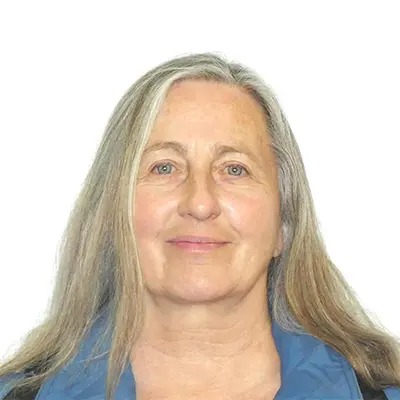
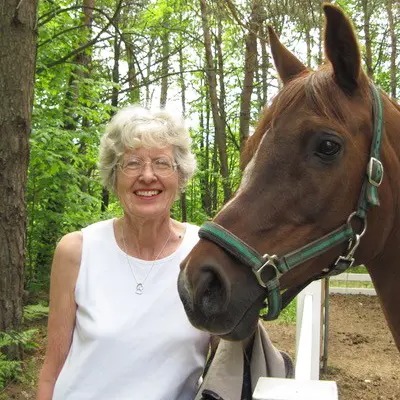
Katherine Houpt, V.M.D, Ph.D., received her veterinary degree and her PhD from the University of Pennsylvania and is board certified by the American College of Veterinary Behaviorists. Dr Houpt specializes in the treatment of behavior problems of animals, primarily dogs, cats, and horses. She directed the Animal Behavior Clinic and taught at the College of Veterinary Medicine, Cornell University, where she is James Law Professor of Behavior Medicine, emeritus.
Dr Houpt is the author with Lee Boyd of Przewalski’s Horse: The History and Biology of an Endangered Species and with Margit H. Zeitler-Feicht of Horse Behaviour Explained: Origins, Treatment, and Prevention of Problems. Dr. Houpt has published a textbook titled Domestic Animal Behavior, now in its fifth edition, as well as numerous scientific articles.
Her current research interests are cribbing and pawing. She has ridden and fallen off horses in more countries than most people have visited, and rides her chestnut Arabian Mare and drives her Swedish Gotland pony.
Qualified Vet
Webinar
USD 180.00
Intern/Resident/PhD (Requires proof of status)
Webinar
USD 135.00
Vet Nurse/Vet Tech (Requires proof of status)
Webinar
USD 135.00
Physiotherapist / Physical Therapist
Webinar
USD 135.00
Farrier
Webinar
USD 135.00
Non-veterinary Attendee
Webinar
USD 135.00
Veterinary Student (Requires proof of status)
Webinar
USD 35.00
If the options you are looking for are unavailable, please contact us.
No tax will be added unless you are a UK taxpayer
Choose currency at checkout